Showing posts with label build. Show all posts

Saturday, June 1, 2019

Porsche Wanted To Build An SUV 45 Years Before The Cayenne Arrived

This is the story of the 597 Jagdwagen.

Things have never been the same for Porsche since it launched the first generation Cayenne SUV back in 2002. Many Porschephiles still haven’t gotten over the fact their beloved sports car brand branched out beyond ass-engined and GT driver’s cars. Their heads nearly exploded when the Panamera arrived in 2009, and ultimately did so upon the Macan’s 2014 debut. But back in the mid-1950s, Porsche designed and built the 597 Jagdwagen, which translates to “hunting car.”

It looks very much like a post-WWII SUV, but don’t think of it as the Cayenne’s ancestor. They have absolutely nothing in common, mechanically speaking. The 597 was very much a rough and rowdy SUV without a hint of luxury or comfort. Back then, Porsche was still trying to find its footing in the industry; was it going to stick solely with sports cars, like the 356 and 550 Spyder? Perhaps not. Porsche figured it was worth taking a shot at winning a NATO-issued tender for a light army-transport vehicle inspired by the original American Jeep. The 597 Jagdwagen was the result, and it had one significant thing in common with the 356: it was also rear-engined.

Both 1.5- and 1.6-liter air-cooled flat-fours were prepared, though the latter was the “premium” engine with a grand total of 50 hp. Top speed? Around 62 mph. Weighing just under 2,200 pounds, the 597 Jagdwagen came with a five-speed manual gearbox – a lot of gears at the time – and the capability of switching between two- and four-wheel drive on the fly. Like any good German-built vehicle, the Jagdwagen was very purposeful, offering solid off-road capability and even managing a climbing gradient of 65 percent. It also had some amphibious capabilities, specifically floating without taking on water. Its monocoque shell did not have doors, but the high sills made it difficult for passengers to climb in and out.

For better or worse (depending on whom you ask), Porsche lost the tender to the DKW Munga, an off-road vehicle built by Auto-Union, the predecessor to today’s Audi. Its winning 4x4 went on to have a 12-year production run with 46,000 examples built. However, selling the car to civilians and private owners wasn't easy. As for Porsche, instead of ending the prototype project completely, it wanted to try to rebrand the Jagdwagen as a 4x4 aimed at hunters, and those who worked in outdoor professions. Porsche invested 1.8 million Deutschmarks into the project, an especially large sum at the time. It wanted the 597 Jagdwagen to find appeal somehow, as the company wasn’t in the mood to take a financial hit just yet.

The result was a somewhat refined civilian version 597 Jagdwagen, now equipped with doors. It could still float, though it was by no means seaworthy. A grand total of 71 units of the 597 were from 1955 until 1958, although just 49 were made for civilians. Not all of them survive today, but the few that do sell for some serious bank. Jerry Seinfeld had one in his vast Porsche collection that later sold for $330,000 at auction. Unlike any generation Cayenne, the 597 Jagdwagen was ugly, but in a cool way. It was designed to be purposeful, not stylish. And in some ways it was ahead of its time; who knew back then that Porsche SUVs would make up a majority of its annual sales.

Aside from its looks, perhaps one reason why the 597 Jagdwagen didn’t find buyers was because it simply looked too much like a German military vehicle. Anything with even a hint of a connection to the Nazis in post-war Germany was considered taboo.


View the original article here

Monday, April 22, 2019

Porsche Can't Decide Whether To Build Cayenne And Macan Coupes

The BMW X6 simply can't hog the entire segment, can it?

Porsche makes a lot of money selling Cayennes and Macans. But that doesn't necessarily mean that coupe and full EV variants will arrive in the near future. Porsche CEO Oliver Blume spoke with Automotive News regarding this very subject and admitted a final decision won’t be made until early next year. "We have to check if it makes sense for Porsche to come with an SUV," Blume said. "But the so-called Mission E isn't going to be the last project in electro mobility. We will continue. That's very, very clear.”

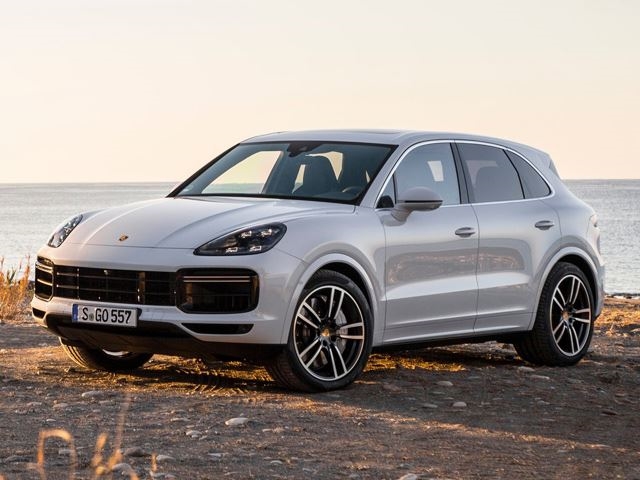
Earlier reports suggested Porsche’s second EV, following the launch of the Mission E, will be an electrified Macan. However, the next generation Macan is due to arrive in 2022, so assuming this current generation Macan will be given the full EV treatment, a 2021 launch date sounds about right. As for a potential Cayenne coupe? Considering the all-new Cayenne is only just now going on sale, Porsche still has some time to make a decision. But why is Porsche even interested in a coupe variant of the Cayenne? Because it could use something to rival the BMW X6 and Mercedes-Benz GLE Coupe. Porsche hasn’t even completely ruled out a Macan coupe either.

Despite the Cayenne’s sleek lines, it’s still classified as a mid-size crossover, not a coupe crossover. Eventually, a Cayenne EV will arrive, but it’s still way too early to know specifics. The Macan EV, which sounds likely, especially since BMW has plans for an X3 EV, is pretty much a given; the coupe variant(s) are somewhat less certain. If we had to guess, the Macan EV and a Cayenne coupe will both be given the green light. Both make sense given today’s crossover market.

(function(w,d,s,l,i){w[l]=w[l]||[];w[l].push({'gtm.start':new Date().getTime(),event:'gtm.js'});var f=d.getElementsByTagName(s)[0],j=d.createElement(s),dl=l!='dataLayer'?'&l='+l:'';j.async=true;j.src='https://www.googletagmanager.com/gtm.js?id='+i+dl;f.parentNode.insertBefore(j,f);})(window,document,'script','dataLayer','GTM-MJCGS3N');var _comscore = _comscore || [];_comscore.push({ c1: "2", c2: "28140907" });(function() {var s = document.createElement("script"), el = document.getElementsByTagName("script")[0]; s.async = true;s.src = (document.location.protocol == "https:" ? "https://sb" : "http://b") + ".scorecardresearch.com/beacon.js";el.parentNode.insertBefore(s, el);})();

View the original article here

Wednesday, January 23, 2019

Porsche Wanted To Build An SUV 45 Years Before The Cayenne Arrived

This is the story of the 597 Jagdwagen.

Things have never been the same for Porsche since it launched the first generation Cayenne SUV back in 2002. Many Porschephiles still haven’t gotten over the fact their beloved sports car brand branched out beyond ass-engined and GT driver’s cars. Their heads nearly exploded when the Panamera arrived in 2009, and ultimately did so upon the Macan’s 2014 debut. But back in the mid-1950s, Porsche designed and built the 597 Jagdwagen, which translates to “hunting car.”

It looks very much like a post-WWII SUV, but don’t think of it as the Cayenne’s ancestor. They have absolutely nothing in common, mechanically speaking. The 597 was very much a rough and rowdy SUV without a hint of luxury or comfort. Back then, Porsche was still trying to find its footing in the industry; was it going to stick solely with sports cars, like the 356 and 550 Spyder? Perhaps not. Porsche figured it was worth taking a shot at winning a NATO-issued tender for a light army-transport vehicle inspired by the original American Jeep. The 597 Jagdwagen was the result, and it had one significant thing in common with the 356: it was also rear-engined.

Both 1.5- and 1.6-liter air-cooled flat-fours were prepared, though the latter was the “premium” engine with a grand total of 50 hp. Top speed? Around 62 mph. Weighing just under 2,200 pounds, the 597 Jagdwagen came with a five-speed manual gearbox – a lot of gears at the time – and the capability of switching between two- and four-wheel drive on the fly. Like any good German-built vehicle, the Jagdwagen was very purposeful, offering solid off-road capability and even managing a climbing gradient of 65 percent. It also had some amphibious capabilities, specifically floating without taking on water. Its monocoque shell did not have doors, but the high sills made it difficult for passengers to climb in and out.

For better or worse (depending on whom you ask), Porsche lost the tender to the DKW Munga, an off-road vehicle built by Auto-Union, the predecessor to today’s Audi. Its winning 4x4 went on to have a 12-year production run with 46,000 examples built. However, selling the car to civilians and private owners wasn't easy. As for Porsche, instead of ending the prototype project completely, it wanted to try to rebrand the Jagdwagen as a 4x4 aimed at hunters, and those who worked in outdoor professions. Porsche invested 1.8 million Deutschmarks into the project, an especially large sum at the time. It wanted the 597 Jagdwagen to find appeal somehow, as the company wasn’t in the mood to take a financial hit just yet.

The result was a somewhat refined civilian version 597 Jagdwagen, now equipped with doors. It could still float, though it was by no means seaworthy. A grand total of 71 units of the 597 were from 1955 until 1958, although just 49 were made for civilians. Not all of them survive today, but the few that do sell for some serious bank. Jerry Seinfeld had one in his vast Porsche collection that later sold for $330,000 at auction. Unlike any generation Cayenne, the 597 Jagdwagen was ugly, but in a cool way. It was designed to be purposeful, not stylish. And in some ways it was ahead of its time; who knew back then that Porsche SUVs would make up a majority of its annual sales.

Aside from its looks, perhaps one reason why the 597 Jagdwagen didn’t find buyers was because it simply looked too much like a German military vehicle. Anything with even a hint of a connection to the Nazis in post-war Germany was considered taboo.


View the original article here

Tuesday, January 15, 2019

Here's What We'd Build With The 306-HP Honda Civic Type R Crate Motor

Honda has the engine that will help it build interesting cars again.

The Civic Type R is the most aggressive car in the Honda lineup. Honda has moved away from its root of high revving, naturally aspirated engines in favor of turbocharged units with more torque. The Type R's 2.0-liter four cylinder engine develops 306 hp and 295 lb-ft of torque. At this year's SEMA show, Honda decided to sell the Type R engine as a crate motor for just $6,500, a relative bargain compared to the Hellcrate motor. This new crate engine offers many opportunities for engine swap builds. Here's five that we want to see.

The Acura ILX sedan is in desperate need of a refresh. Acura's entry-level sedan is no more than a slightly upscale Honda Civic, which is a bit disappointing in today's market. The ILX still uses the old 2.4-liter inline-four, not the new 1.5-liter turbocharged engine from the latest Civic. Acura should consider building an ILX Type R or Type S with the engine from the Civic Type R. This would compete perfectly with the Audi S3, which shares a platform with the Volkswagen Golf R. The Civic Type R is only available with a six-speed manual, but we think that Acura should keep the ILX's eight-speed dual-clutch. The S3 is only offered as a dual-clutch, which means that the ILX would be a perfect competitor.

We love the S2000, and we hope that Honda finally brings back this legendary sports car. There have been rumors that a new S2000 could pack a supercharger and a turbocharger, or even come with a hybrid drivetrain. We hope that Honda doesn't overcomplicate the S2000 like it did with the new NSX. The Type R engine would be perfect for a new S2000, and could even into the engine bay of the old car. The S2000 was known for its high revving VTEC, but it wasn't the fastest sports car around. If we had a crashed S2000 in need of a motor, we'd love to see how fast it could be with the engine from the Civic Type R. This crate engine would add 66 hp and almost double the torque of the S2000.

Like with the S2000, we'd love to see an original NSX with Civic Type R power. Even the 2005 NSX, which came with a 3.2-liter V6 is less powerful than the new Civic Type R engine. It may be a bit tricky to make an engine that was designed for a FWD car work in a mid-engined configuration. However, we think that someone could make it happen with great results. We'd even love to see Acura build a mid-engined sports car below the NSX ditching the hybrid system and AWD for the Type R's engine. This could compete with sports cars like the Porsche 718 and Alfa Romeo 4C.

The Honda HR-V is clearly not a car made with enthusiasts in mind. The HR-V is Honda's compact crossover that slots below the larger CR-V. Even though Honda sells the base HR-V with a six-speed manual transmission, the only engine choice is a 1.8-liter four-cylinder with 141 hp. The HR-V takes nearly 10 seconds to hit 60 mph, which is very uninspiring. We wish that Honda would build an HR-V Type R with 306 hp and a six-speed manual transmission. This car would only really compete with the Nissan Juke Nismo, but the Honda would have much more power. It may seem like an odd idea, but a 300-plus hp crossover with a manual does sound like a ton of fun.

Not all engine swap builds have to be done with engines from the same manufacturer. Plenty of Chevy LS engines are placed into cars from other manufacturers due to its wide availability for parts. We'd love for someone to take the Type R crate motor and use it to build a Toyota MR2. The MR2 was a very well balanced car, but it only even produced 200 hp in the second generation turbo version. The Type R's engine would bring this number up by over 100 hp, which would make a custom MR2 an extremely formidable sports car.


View the original article here