Showing posts with label Turbo. Show all posts

Tuesday, May 28, 2019

Polestar 1 Costs Nearly As Much As A Porsche 911 Turbo

Pricing details have finally been confirmed for Polestar’s first ever performance coupe.

Pre-orders for Polestar’s first ever performance car, aptly called the Polestar 1, recently went live for prospective customers. While demand has been high, pricing details hadn't yet been confirmed – until now. At the Beijing Auto Show, Polestar finally confirmed how much the plug-in hybrid will cost – and it won't be cheap. In the US, the Polestar 1 will be sold for $155,000, while Europeans will be able to buy the hybrid performance coupe for 155,000 Euros.

An all-inclusive monthly subscription service will also be available, with details to be announced at a later date. At $155,000, the Polestar 1 costs around the same as the BMW i8 and Acura NSX hybrid performance coupes. The Polestar 1 is more powerful than its rivals with 600-hp on tap, and also has the longest electric range of any hybrid car at 90 miles. Its limited production run of just 500 models may also explain how Polestar is justifying its asking price. But paying $155,000 for a car related to Volvo is still hard to swallow – especially when you consider it costs nearly as much as a Porsche 911 Turbo.

So far, over 7,000 people in 18 countries have placed a deposit to pre-order the Polestar 1. “We have seen a strong initial response from our first customers,” said Polestar’s CEO Thomas Ingenlath. “This gives us confidence that our brand has a bright future. In 2019 already we will launch our next car, the Polestar 2 – a mid-sized fully-electric car which is well developed in its engineering phase. We will follow that up with the Polestar 3, a stunning electric SUV with a beautiful aerodynamic silhouette that is already advanced in its design phase.” Pre-production testing for the Polestar 1 will start by the end of the year before customer deliveries start next year.


View the original article here

Sunday, May 26, 2019

2018 Porsche Panamera Turbo S E-Hybrid Review

The redesigned Panamera range arrived in 2016 and has already received a number of additions and updates. Among them is the range-topping Turbo S-E Hybrid which is all-new for 2018 and offers well-heeled shoppers the opportunity to embarrass supercars while still being capable of zero-emission city driving.

What’s it like inside?

The interior has received a welcome upgrade with the redesign and now features all of the latest technological and design elements found in the new generation of Porsches. Material quality is exemplary and the majority of controls are laid out logically around the driver. The sheer number of electronic systems fitted does necessitate a row of buttons along each side of the shifter but the majority of functions can be controlled via the large centrally mounted touchscreen.

There is comfortable seating for four and if additional rear passenger space is required the Executive model offers a lengthened wheelbase. Cargo space is decent and loading items into the trunk is made even easier through the rear hatch of the available Sport Turismo body style.

How does it drive?

The most powerful Panamera in the range is also the heaviest yet despite this the standard adaptive air-suspension and advanced electronic stability systems provide it with the kind of handling and road-holding usually reserved for much smaller and nimbler sedans.

Ride quality too is good and the Turbo S E-Hybrid transitions effortlessly between boulevard cruiser and backroad hooligan.

2018 Porsche Panamera Turbo S E-Hybrid Sedan Exterior What about the performance?

Whereas the previous Panamera Turbo S featured a boosted version of the standard Panamera Turbo drivetrain, the latest version adds an electric motor to the standard engine to increase power levels instead.

The 4.0-liter twin-turbo V8 pumps out 550 horsepower and 567 lb-ft of torque while the electric motor provides an additional 136 hp and 295 lb-ft. This combines to give maximums of 680 hp and 626 lb-ft which is transmitted to all four wheels through an 8-speed dual-clutch transmission.

Despite weighing an additional 500 pounds over the standard Turbo, the Turbo S E-Hybrid out-drags it to 60mph with a time of 3.2-seconds. It provides the kind of instantaneous acceleration that is familiar to EV owners with the sustained top-end power that only a powerful gasoline engine can provide.

Fuel economy figures should also shade the standard Panamera Turbo and a claimed all-electric range of 31 miles should make for a fuel-efficient daily commute.

2018 Porsche Panamera Turbo S E-Hybrid Sedan Exterior What are my options?

The Porsche Panamera Turbo S E-Hybrid is available in one trim level that includes just about every option fitted to the lesser models in the range. It can also be specified in Executive extended wheelbase or Sport Turismo hatchback body styles.

Notable standard equipment includes 21-inch alloy wheels, adaptive air suspension, 14-way power front seats with leather and heating all-round, 12.3-inch touchscreen with integrated navigation and smartphone compatibility.

2018 Porsche Panamera Turbo S E-Hybrid Sedan Exterior

Available options include the Premium Package Plus (Lane change assist, front seat ventilation, LED dynamic headlights and soft close doors) and the Assistance Package (Adaptive cruise control, traffic jam assist, lane keep assist and night vision assist).

While there are a myriad color and interior detail options, notable individually selectable extras include a sport exhaust system, 18-way adaptive sport seats, rear axle steering and a Burmester audio system.

2018 Porsche Panamera Turbo S E-Hybrid Sedan Shifter The Verdict

Silent but violent, although not at the same time. That about sums up the latest Porsche Panamera Turbo S E-Hybrid, it is perhaps the ultimate mass-production example of performance enhancing hybrid technology.

Its real-world efficiency levels will depend largely on how it is used. As a technological showcase of what we can expect from Porsche in the future, the Turbo S E-Hybrid is a real eye-opener and its dynamic abilities place it at near the top of the luxury performance sedan pile. Its biggest challenger comes from within its own ranks in the form of the significantly cheaper and still eminently capable Panamera Turbo.

2018 Porsche Panamera Turbo S E-Hybrid Sedan Exterior

View the original article here

Saturday, May 25, 2019

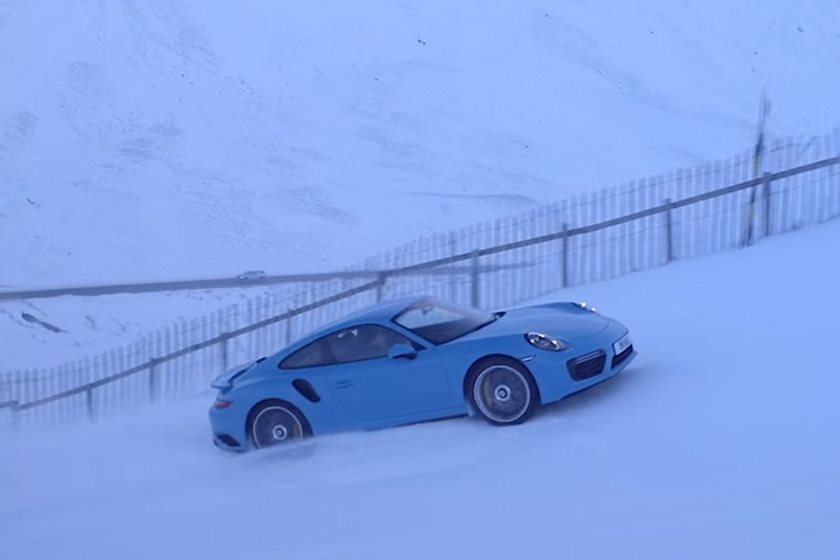
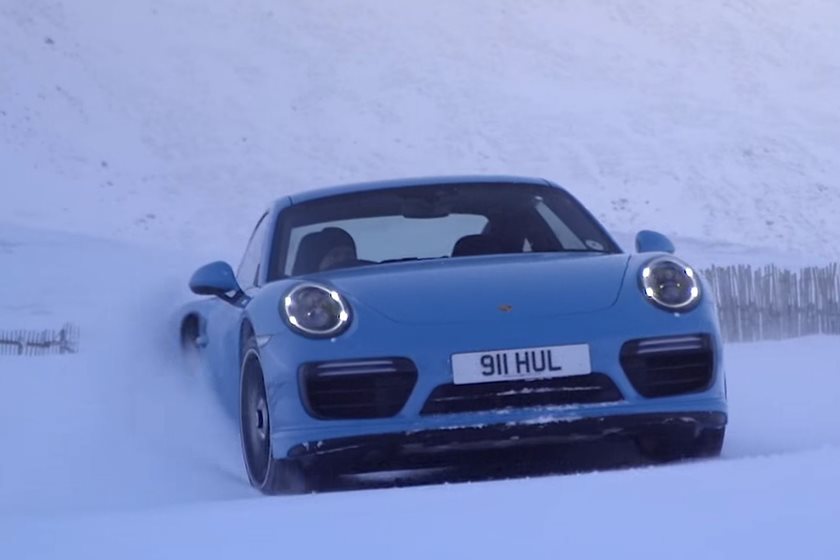
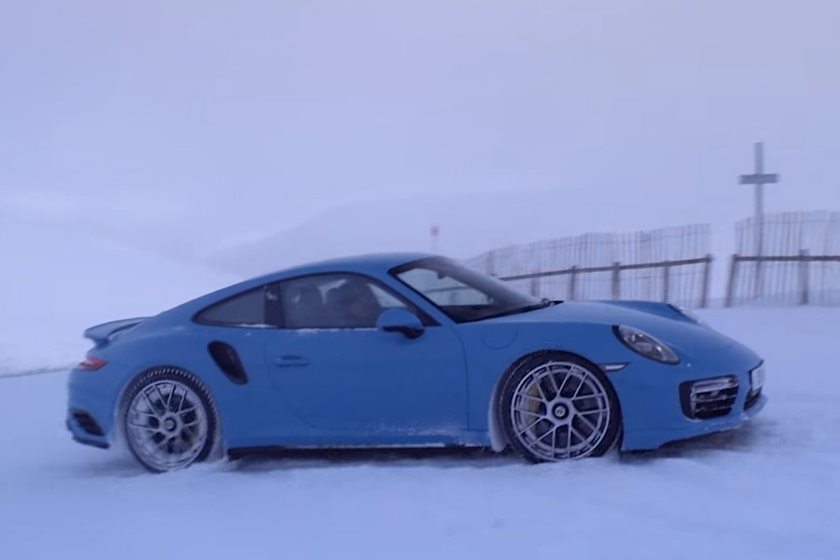
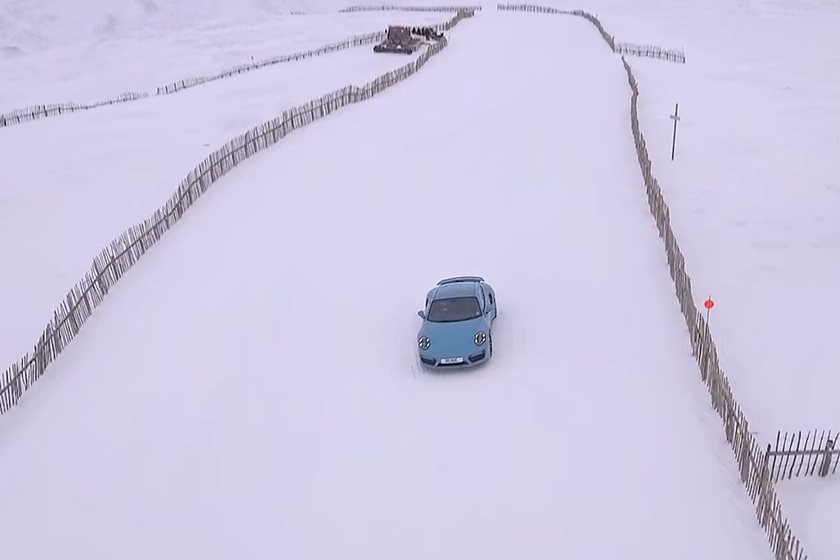
Watch A Porsche 911 Turbo S Plow Its Way Up A Snow-Covered Ski Slope

All-wheel drive plus 580 hp is awesome.

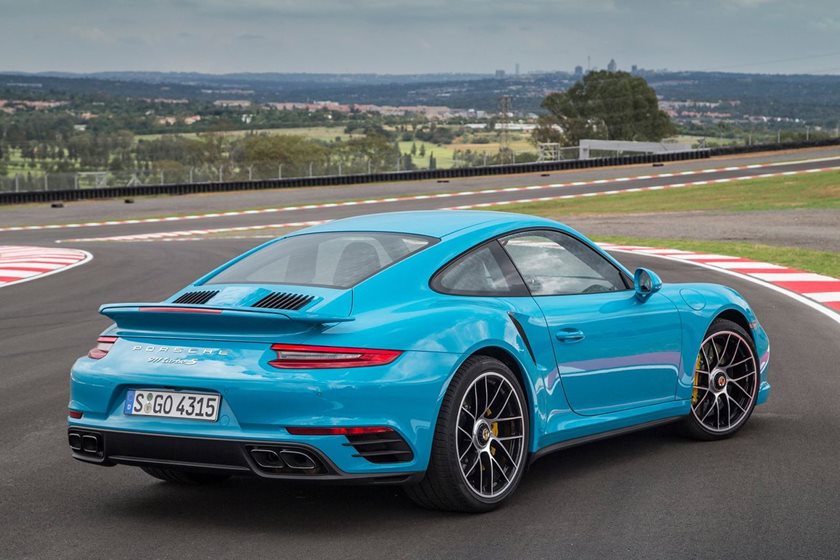
It’s not unusual to hear people say the Porsche 911 is the ideal sports car. For over 50 years, the butt-engined two-door has helped define what exactly makes a sports car and it’s showing no signs of stopping any time soon. But did you also that for 30 years Porsche has been building all-wheel drive 911s as well? What started as experimental technology on the also iconic 959 supercar has become an extremely popular feature for many 911 buyers, and for very good reason. Not everyone lives in year-round snow-free environments.

Nor should you have to in order to have a 911, hence available AWD. It also just so happens to be standard on the 911 Turbo S. Combined with 580 hp, the 911 Turbo S is, perhaps, the perfect everyday high-performance machine that balances the fine line between sports and supercar.

To show just how capable the AWD 911 Turbo S can be, Porsche brought one to a Scottish ski slope and instructed its driver to drive up the snow-covered mountainside. Speed was not the goal but rather the capabilities of the AWD system. The professional driver probably makes things look easier than they really are, but the fact of the matter is that the 911 Turbo S is your year-round high-performance/supercar. Try not to have too much fun.


View the original article here

Wednesday, May 8, 2019

Spied: 2013 Porsche 911 Turbo Cabriolet

Our spy photographers have just sent in the latest photos of the 2013 Porsche 911 Turbo Cabriolet testing on the Nurburgring.

August has been a very busy month for Porsche. The new '991' series of the 911 has just been officially revealed in base form and our spy shooters have just snapped the latest photos of the 911 Turbo Cabriolet prototype testing around the Nurburgring. The upcoming generation of the 911 Turbo Cabriolet should arrive on the market in 2013 complete with a twin-turbocharged flat-six engine, new active rear spoiler and additional cooling vents all around.

You can most likely expect it to produce an output slightly above the 530hp and around 516 lb-ft of torque of the current Turbo S.It will also have lower fuel consumption and emission rates. An upgraded PDK-S dual clutch transmission will also likely be offered along with a seven-speed manual. The standard 2012 Porsche 911 Carrera and 911 Carrera Cabriolet are both scheduled to make their live debut at Frankfurt next month, with the 911 Turbo Coupe and Cabriolet most likely to make their first appearance at the 2012 Geneva Motor Show next March. Photos: CarPix


View the original article here

Wednesday, May 1, 2019

Porsche 911 Turbo S Laps Willow Springs Almost As Fast As 918 Spyder

It lapped the circuit less than a second slower than the 918 Spyder hypercar.

Automakers love riling off performance specifications of new models, but comparing lap times is a better measure to prove a new car's capabilities. Take the Porsche 911 GT2 RS, for example. Porsche billed it as the most powerful 911 ever produced, but people really started to take notice when it shattered the Nurburgring production car lap record. Motor Trend uses the Willow Springs circuit as a benchmark, and its latest test of the 2017 Porsche 911 Turbo S shows that it approaches hypercar levels of performance.

While filming an upcoming episode of Ignition, Motor Trend’s Randy Pobst set an impressive time of one minute and 24.26 seconds in the Turbo S at Willow Springs. It shows just how much progress Porsche has made when you compare it to the one minute and 27:81 time posted in the previous Turbo S, or the last GT3 which set a time of one minute and 27.22 seconds. Things get even more interesting when you compare it to the 918 Spyder as the times were less than a second apart. The hybrid hypercar posted a time of one minute and 23.54 seconds at Willow Springs, making it only 0.72 seconds quicker than the Turbo S.

It’s surprising given that, on paper, these cars are in completely different leagues. The 3.8-liter twin-turbo flat-six in the 2017 Porsche Turbo S pumps out 580 horsepower, while the 918 Spyder’s hybrid setup brings the output up to 887-hp. Don’t forget, too, that the $190,700 Turbo S is considerably cheaper than the 918, since used examples will set you back around $2 million. With the 911 setting new performance benchmarks, it now makes sense why Porsche is reluctant to build a successor to the 918 any time soon. No doubt Porsche is waiting for the technology to significantly evolve to justify the costs before bringing out a new halo car.


View the original article here

Wednesday, April 10, 2019

2018 Porsche 911 Turbo Cabriolet Review

For some reason Porsche is a supercar brand that most people see as an achievable goal even when some models cost a lot more than the Italian rivals. The automaker is famous for it’s 911 model, but those numbers actually cover a wide range of Porsches that may look the same to the untrained eye, but there’s many differences inside and out with regards to engines and drivetrains – you have to know your stuff if you decide to tackle with one on the streets if only to avoid embarrassment. One of the most popular models is the 911 Turbo Cabriolet and it’s bigger brother, the Turbo S Cabriolet, and it’s easy to see why.

Interior

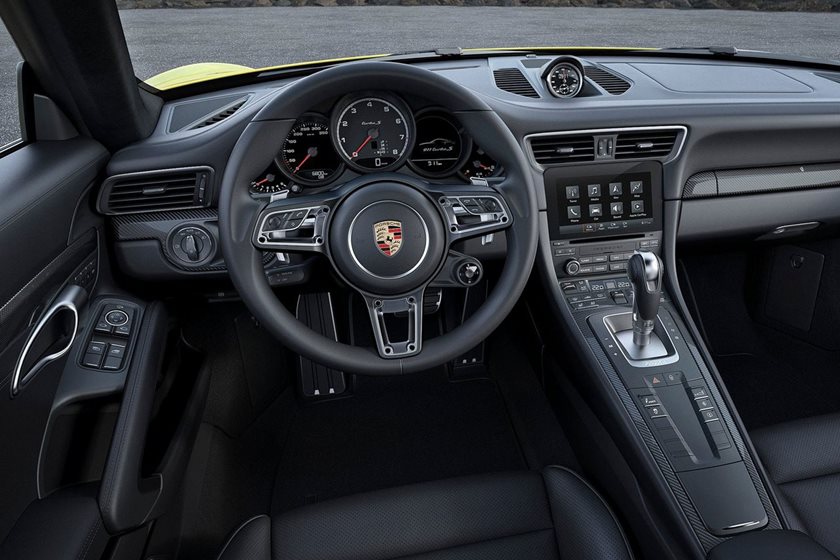
With Porsches having the same basic shape over the years, it stands to reason that things inside will also retain some basic guidelines. As with most 911s the cabin is filled with premium quality materials in the form of brushed aluminum, all manner of leathers and a helping or two of carbon fiber if optioned. There are plenty trim and color options available that should see creative owners being able to spec a unique package. The race-style seats can be optioned with power adjustments from 4-way to 18-way (the latter being around $1,150) and can be made to match the dash and door cards or can be a complete contrast. There’s a typical Porsche instrument cluster in the 911 Turbo Cabriolet with the tachometer tagging center stage, visible through a brilliant a 3-spoke multifunction sports steering wheel. In the center of the dash you’ll find the clear screen for the improved infotainment system just above the climate control panel. Luggage space? As pointless as the rear seats.

Driving (Ride & Handling)

With the Porsche 911 Turbo Cabriolet sharing platforms and underpinnings with other serious performance Porsches, you can expect a drive that’s nothing short of exhilarating. The twin-turbocharged flat 6 is a beast of a motor, and in the S model even more so. A variety of drive modes offer different handling response, but engaging Sport+ and using the Sport Response button (puts powertrain and settings on optimum for 20 seconds) is when things get silly. The all-wheel drive system and it’s associated electronics do an amazing job of eliminating wheel spin and manage to convert all that horsepower into a rapid forward motion that will catch you off guard. In fact in the Turbo S Cabriolet the launch is so near perfect that it’s one of the quickest 0-60 mph cars in production. As for the rest of the drive, the steering is precision sharp and the PDK transmission shifts to the next gear before your brain has even realized there is a next gear. This is a car that makes slow drivers look fast.

Performance (Engine & Transmission)

Performance is the name of the game in the Porsche 911 Turbo Cabriolet. Here the 3.8-liter’s twin-turbochargers are tuned to produce 540 hp and 486 lb-ft of torque and this will send the car to 60 mph in an amazing 2.9-seconds. For the Porsche 911 Turbo S Cabriolet attention was paid to the turbochargers and the tune and so the added S sees power rise to 580 hp with 533 lb-ft of torque, and through much electronic wizardry and magic, the car has been times to hit 60 mph in as little as 2.6-seconds. It can also run the quarter in less than 11-seconds and tops out at 205 mph. Porsche’s brilliant 7-speed PDK transmission and the all-wheel drive drivetrain is found in both models.

Equipment & Safety

There’s all the usual tech and spec in the Porsche 911 Turbo Cabriolet that’s much the same across the range. Driver aids and convenience features include system like dynamic chassis control; 4-wheel traction control, stability control, adaptive cruise control and lane-change assist among others. For the best performance you need a Sport Chrono package, and if you want to drown out a screaming engine then the $3,710 Burmester high-end surround sound is available. The open top Porsche sees fitment of dual front airbags, side airbags and a thorax airbag located in the seat side bolsters. With no roof some extra protection is needed and so there’s a Rollover Protection System that extends up from behind the rear seats if the on board sensors suspect a rollover.

Verdict

You can look around the Porsche 911 Turbo Cabriolet for as long as you want, and you can walk around inspecting the interior in the same way and you’d be hard pressed to find a way to criticize the car. Small things that may annoy can usually be changed to a specification, color or material of your choice to rectify things. It’s a great-looking 911 that’s not only built to the usual high quality, it’s a fast and powerful supercar that’s up to the task of being a daily driver and can double as a track toy if you have the tire, fuel and brakes budget. As a whole, in either Turbo Cabriolet or Turbo S Cabriolet guise, you get a great package but you do pay for all the car’s accolades.


View the original article here

Friday, April 5, 2019

2018 Porsche Cayenne Turbo S Review

The Porsche Cayenne has been fighting off ever-improving adversaries in the sporty mid-sized SUV sector and the latest redesign has finally reached our shores.

However, if you want the most powerful (and expensive) Cayenne currently on sale then it will have to be the previous-generation Turbo S. Still available in 2018 until the new model arrives, this massive bruiser is still a formidable performance SUV.

What’s it like inside?

There is nothing wrong with the fit and finish and general material quality in the Cayenne, it still looks good too, although certain design features are now looking tired and the need for a physical key slot really gives away its age.

The row of buttons littered around the transmission tunnel are also at odds with modern minimalist designs but a recently updated infotainment system and the solidity of the switchgear is bang up to date.

So too are the very supportive front sport seats, rear passengers will still find it a squeeze, especially if they sit three abreast and the cargo area is below average.

How does it drive?

The Turbo S is just about as dynamic and involving as a hefty SUV can get, it is fitted with most of the Porsche back catalogue of electronic and suspension aids so its ability to both cruise smoothly over rough tarmac and blast around corners with minimal body lean is as impressive as ever.

The sharp steering and powerful carbon ceramic brakes give you confidence to push harder into corners and while few owners will push the Turbo S to its limits, it does make for a very competent and safe vehicle in just about any driving conditions. No, there is no logically sound reason to own such a vehicle but there is something strangely appealing about the way it goes about its business.

What about the performance?

The latest Cayenne Turbo may have downsized to a 4.0-liter engine but this Cayenne Turbo S still uses a 4.8-liter twin-turbo V8 which produces 570 horsepower and 590 lb-ft of torque. Both numbers are slightly higher than the new (550hp, 567 lb-ft) Turbo manages and it pips the newer car to 60 mph too, taking 3.8-seconds versus 3.9. It is however a bit slower, topping out at a pedestrian 176 mph versus the new Turbo’s 177 mph effort.

All this power is sent to all four wheels via an 8-speed automatic transmission, the sound through the optional performance exhaust is totally intoxicating too and it goes some way in justifying the 21-mpg overall fuel economy you can expect.

What are my options?

Being the range-topping model, the Turbo S has been packed with most of the desirable features you would have to add on the lower-rung variants, the difference here is that you pay for it all up front.

Noteworthy standard luxury and convenience features include 18-way adaptive power seats, 14-speaker Bose audio system, adaptive LED headlights and carbon-fiber interior trim. Performance levels are enhanced by the fitment of active anti-roll bars, torque vectoring braking system, an electronic-locking rear differential and carbon ceramic brakes for the 21-inch wheels.

There are still a full range of colors and interior details to pick from and you should definitely get the sport exhaust and high-end Burmester surround sound system.

The Premium Package Plus is the sole package available for the Turbo S and it includes a panoramic roof, comfort lighting package, keyless entry and drive, power rear sunblinds, front seat ventilation, lane change assist and surround park assist.

The Verdict

The evolution of the mid-sized Cayenne SUV continues and while the latest generation models do move the game on with cutting-edge safety and technology features, for the time being the most powerful and quickest model on offer is still the second-generation Turbo S.

Aside from the older design this twin-turbo beast is still well up to the task of blasting along a twisty mountain pass and there are few alternatives, old or new out there that can come close to matching it.


View the original article here

Friday, March 29, 2019

Awesome Bespoke 911 Turbo Cabrio by Porsche Exclusive

This is how money can buy you a personality!

Buying a Porsche 911 Turbo, both in coupe and convertibleform, is an awesome way of making a statement. And with the Cabriolet model starting at $160,700, you aren't likely to run into a lot of identical cars –no matter what neighborhood you live in. But like other automakers, Porscheknows that the select few who can afford its cars are really into personal,individualized statements. That’s why Porsche Exclusive allows customers tocustom-order their Porsche to their specific tastes.

And for this customer, it seems like taste is plentiful,because the images released by Porsche of this one-off 911 are absolutelybreathtaking. The customer ordered his Slate Grey Cabrio with Garnet Redleather interior and decorative stitching in contrast black. There is also anadded PCM package in leather, leather air vents and a carbon center console. Onthe exterior, black bi-xenon headlights include the Porsche headlight-cleaningsystem, and the car rides on 20-inch 911 wheels in high-gloss black.


View the original article here

Monday, March 25, 2019

Next Porsche 911 Turbo Cabriolet Spied Running Around Nearly Naked

The camouflage continues to peel away, this time at the Nurburgring.

Here’s what we know: Porsche is hard at work developing the next generation 911 lineup. At this point, the 992 911 Carrera should be nearly good to go, as it’ll reportedly make its official debut this fall at the Paris Motor Show. Other variants will soon follow, such as the next 911 Turbo. While we’ve already seen some spy shots of the 992 911 Turbo coupe, today, for the first time, our spy photographers have spotted the new 911 Turbo convertible out testing in very familiar turf: the Nurburgring. How can we tell this is the Turbo and not the Carrera?

Just look at its wider fenders and the big rear spoiler. Sources tell us the 992 911 Turbo coupe and convertible will come powered by the must-have flat-six, which will of course be twin turbocharged. Total output is projected to be somewhere in the neighborhood of around 600 hp. Anything less wouldn’t be good. Why? Because the current generation 911 Turbo S already produces 580 hp, so there’s no way Porsche could reduce output in this case. Power will be directed to all four wheels through the latest version of Porsche’s highly regarded seven-speed PDK dual-clutch transmission. Looking more closely at these photos, it’s kind of hard to make out some of the Turbo’s details.

Thanks to previous shots of the coupe version testing, however, we can see Porsche has done a nice job with the styling updates. For example, up front there are double LED light strips encased in the front grille. The hood extends all the way to the bumper, a styling trait borrowed from the classic 911. This time, however, there’s a far more clear view of final shape of the air intakes on the rear fenders. We’ll learn a lot more about the 992 911 Turbo throughout the year as hype will continue to build following the 992 Carrera’s debut. So when will we see the new Porsche 911 Turbo? Based on Porsche’s reveal history, new 911 Turbos launch roughly one year following the 911 Carrera’s debut, meaning Frankfurt 2019 is a very good bet in this case.


View the original article here